
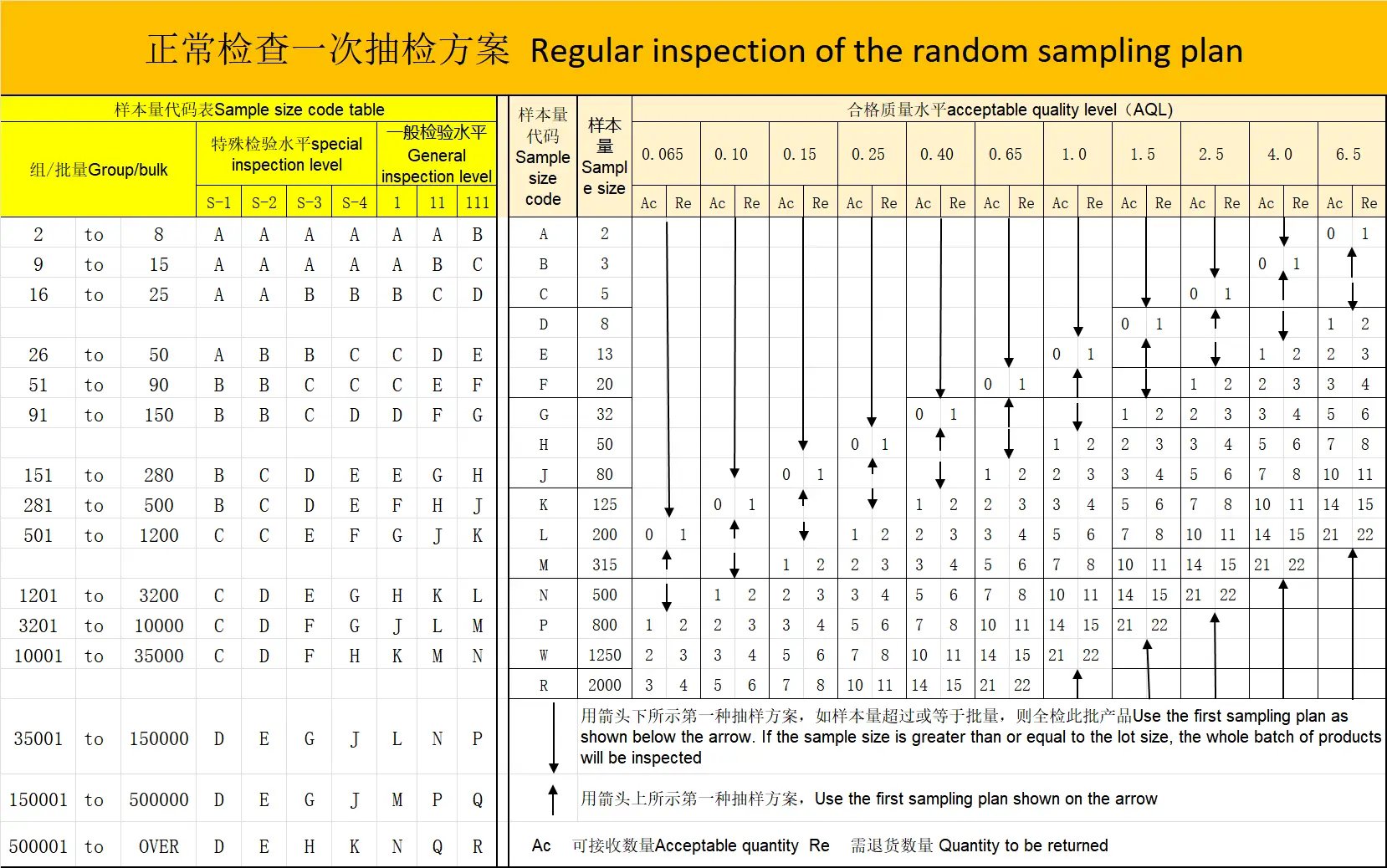
The AQL table (Acceptance Quality Limit table) is the core tool used to build a statistical sampling plan for a random product inspection. It tells you exactly how many units to inspect from a production lot and the maximum number of defective samples that can be accepted before the batch is rejected. For any importer sourcing from China, understanding the AQL table is the first step to controlling product quality without checking every single piece.
What Is the AQL (Acceptance Quality Limit)?
The Acceptance Quality Limit (AQL) is the worst tolerable process average for a continuous run of batches. In plain terms, it is the highest percentage of defective goods you are willing to accept in a shipment. A lower AQL means stricter inspection; a higher AQL means more defects are tolerated. CGF Inspection applies AQL sampling in line with ISO 2859-1 and ANSI/ASQ Z1.4 — the international and U.S. standards derived from the legacy MIL-STD-105E military standard.
The Two AQL Tables You Need
A complete AQL sampling plan uses two linked tables:
- Table 1 – Sample Size Code Letter: based on the lot or batch size and the inspection level (Level II is the default for most consumer-goods inspections), this table returns a code letter (e.g. L, M, N).
- Table 2 – Acceptance / Rejection Numbers: using that code letter and your chosen AQL percentage, this table gives the number of samples to inspect and the maximum allowed defects (Ac / Re) for major and minor defect classes.
Step-by-Step: Build a Sampling Plan with the AQL Table
Let us walk through a real example that CGF inspectors use on the factory floor:
- Your order is 5,000 pcs (lot size).
- You select Inspection Level II (the default general inspection level).
- From Table 1, lot size 5,001–10,000 at Level II gives code letter L.
- From Table 2 (normal severity), code letter L = 200 samples to be checked.
- You set limits of 2.5% AQL for major defects and 4.0% AQL for minor defects.
- Result: accept the batch only if you find ≤ 10 major and ≤ 14 minor defects among the 200 samples; more than that and the lot is rejected.
How to Choose Your AQL Levels
Defects are normally split into three classes, each with its own AQL:
- Critical defects (safety / hazard, e.g. broken plug): AQL 0 — zero tolerance.
- Major defects (product unusable or badly flawed): typically AQL 1.0–2.5.
- Minor defects (cosmetic only): typically AQL 2.5–4.0.
The right AQL depends on product risk, buyer requirements and destination-market rules. CGF’s qualified inspectors help you set these levels before the Pre-Shipment Inspection (PSI) begins.
Why AQL Sampling Matters for Importers
Checking 100% of a 5,000-piece order is slow and costly. AQL sampling gives you a statistically valid read on the whole batch from a small sample, so you can catch substandard production early — during During Production Inspection (DPI) or at the final PSI — and avoid shipping defective goods to your customers.
CGF Inspection’s AQL-Based Inspection Process
As an independent third-party inspection company based in Hangzhou, CGF Inspection applies AQL sampling across all inspection types — from Initial Production Check (IPC) to Container Loading Supervision. Every on-site check follows a documented sampling plan and delivers an English inspection report within 24 hours.
Need an AQL sampling plan for your next order?
Use our free AQL Calculator, or let CGF Inspection build the sampling plan and inspect your goods in China.
Get a Free Quote Open AQL CalculatorFrequently Asked Questions
What does AQL 2.5 mean?
AQL 2.5 means you accept a maximum average defect rate of 2.5% for that defect class. On a 200-piece sample it allows roughly up to 10 major defects before the lot is rejected.
Which AQL standard does CGF use?
CGF Inspection follows ISO 2859-1 (international) and ANSI/ASQ Z1.4 (United States) sampling procedures, the modern replacements for the old MIL-STD-105E standard.
What is the difference between major and minor defects?
A major defect makes the product unusable or significantly flawed (e.g. a broken zipper); a minor defect is cosmetic only (e.g. a small scratch). They carry different AQL limits — typically 1.0–2.5 for major and 2.5–4.0 for minor.
Can CGF customize the AQL for my product?
Yes. We set critical / major / minor AQL levels together with you before inspection, based on your product type, market and quality requirements.